A Caring Approach to Memorial Planning for Family Members
As you are faced with the loss of a dear one, the idea of planning a funeral can feel overwhelming. Emotions are intense, and the choices that lie ahead can be challenging. However, tackling funeral planning with compassion and thoughtfulness can create a sincere farewell while also lessening some of the stress for family and friends. Understanding the steps involved can help guide you through this challenging time and ensure that the wishes of your loved one are honored.
In this piece, we will explore a range of important aspects related to memorial planning. From understanding the differences between different types of offerings to the emotional side of making plans, we aim to provide a compassionate roadmap. This manual will provide you with the insight and resources necessary to navigate the intricacies of funeral planning, making the process a somewhat easier as you celebrate the life of someone special. By planning in advance and being well-informed, you can create a heartfelt tribute that reflects the unique personality and values of your loved one.
Key Elements in Burial Planning
When faced with the loss of a loved one, the first crucial step in memorial planning is to gather the necessary data and records. This includes obtaining the certificate of death and any necessary paperwork that might be required, like a last will or pre-planned funeral arrangements. Knowing the requirements will help simplify the process during a challenging time. Find out more is also helpful to decide who will be responsible for making arrangements and to communicate this with relatives to reduce confusion.
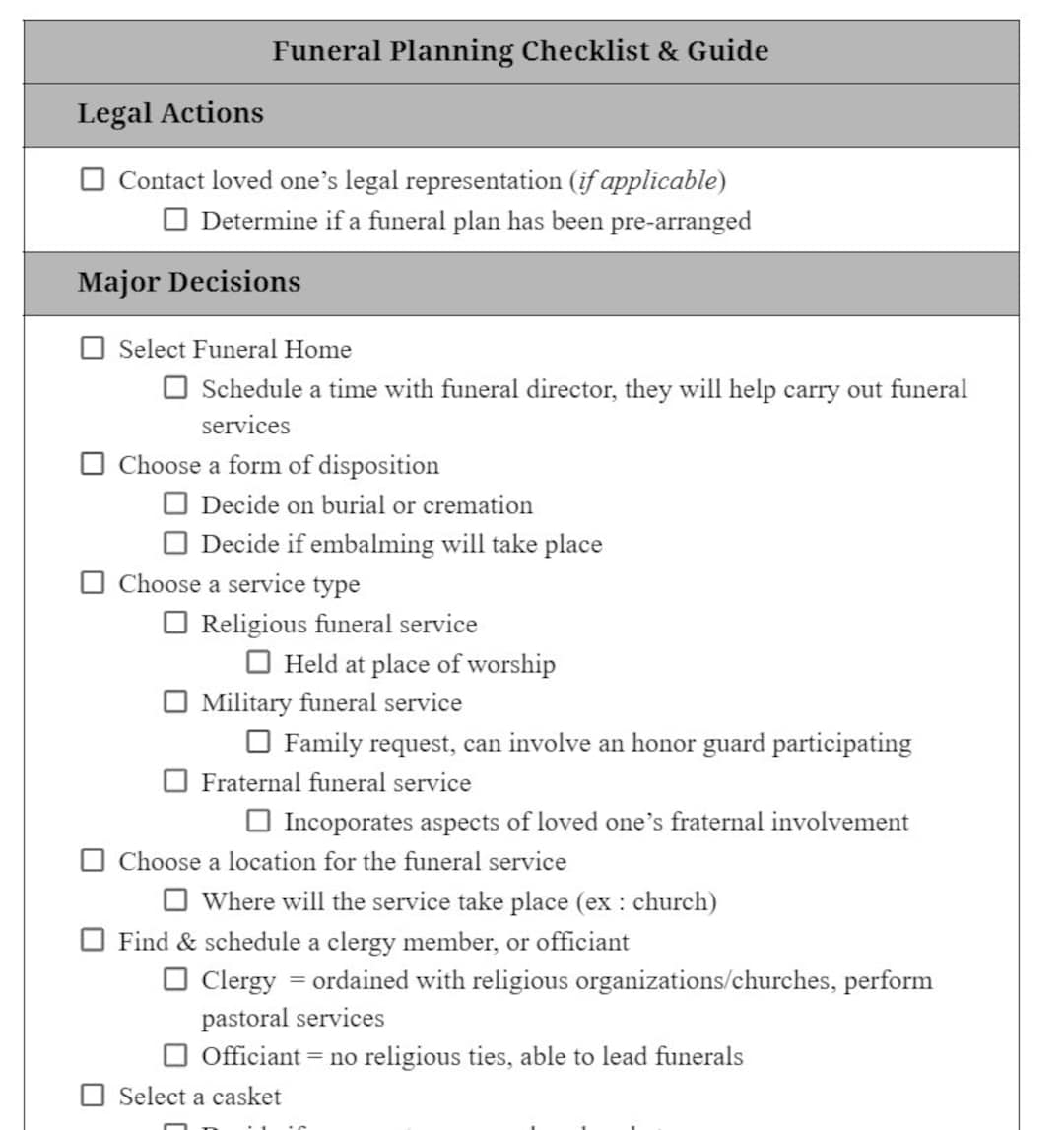
Next, consider the wishes of the deceased regarding their funeral service. This step can involve looking over any written instructions they may have provided, consulting with relatives, or speaking about their desires directly if possible. Knowing whether they wanted a interment or ashes scattering, a traditional funeral service or a life tribute, allows families to celebrate their loved one’s memory while ensuring that their wishes are respected.
In conclusion, it is crucial to create a budget for the costs of the funeral. Funeral planning costs can differ significantly, so a good understanding of your budget will help inform decisions on services, caskets, and venues. Be sure to factor in costs for aspects like flowers, death notices, and any additional personal touches you wish to add. By organizing financial considerations upfront, families can concentrate on celebrating the life of their dear one without the stress of unforeseen expenses later on.
Understanding Expenses and Options
As arranging a funeral, understanding the expenses involved is crucial for forming knowledgeable decisions. Funeral costs can vary significantly based on various factors, such as the kind of service, interment or ash scattering choices, and extra services like commemorative products or travel. Loved ones should equip themselves by contrasting prices at multiple funeral homes and seeking itemized quotes, which help clarify what particular offerings and products are included. This openness lets families to plan financially accurately and avoid unforeseen financial burdens during an already difficult period.
Investigating different memorial choices is just as crucial. Loved ones can choose among classic burial services, ashes scattering, or memorial services, each catering to different preferences, traditional practices, and budget considerations. Although traditional burials may be higher in price on account of costs associated with coffins and burial plots, ashes scattering typically offers a less costly alternative. Additionally, many loved ones now prefer customized ceremonies, which can showcase the departed's personality and passions, leading to distinctive and purposeful tributes without necessarily increasing combined expenses.
At the end of the day, the most appropriate decision will depend on personal beliefs, principles, and economic situations. Engaging in candid discussions about these choices with family members can ease the determination process, ensuring that the service not only honors the memory of the loved one but also aligns with the family's financial status. By proactively to grasp both costs and options, families can traverse the challenges of funeral planning with increased ease and understanding.
Sentimental Aspects and Assistance
When faced with the passing of a loved one, the emotional weight can be immense. Sorrow manifests in many forms, and it is crucial to acknowledge these feelings while dealing with the challenges of arranging a funeral. Rushing through decisions or avoiding conversations about preferences can increase the emotional burden, making it essential to set aside time to reflect on how to memorialize your loved one in a way that feels right. Allowing oneself to grieve and ask for support from companions, relatives, or experts can help alleviate the strain of this significant task.
Support systems play a vital role during this difficult time, whether they consist of family members, intimate friends, or support groups. Open communication about feelings and requirements can foster understanding and create a sense of collective responsibility in planning. It is important for families to work together, ensuring that all voice is listened to while also acknowledging personal coping mechanisms. When planning a funeral, think about involving those near and dear, as their perspectives can lead to a much more meaningful celebration of life.
Furthermore, utilizing resources such as mourning counselors or funeral directors can be beneficial. These professionals are prepared to guide families through the planning process and provide essential emotional support. They can also assist in clarifying choices, offer practical advice, and ensure that the planning aligns with cultural or personal values. Pursuing this kind of assistance not only facilitates smoother decision-making but can also provide a soothing presence amid the chaos of loss.